Enhancing Student Support with Course Teaching Assistant Bots
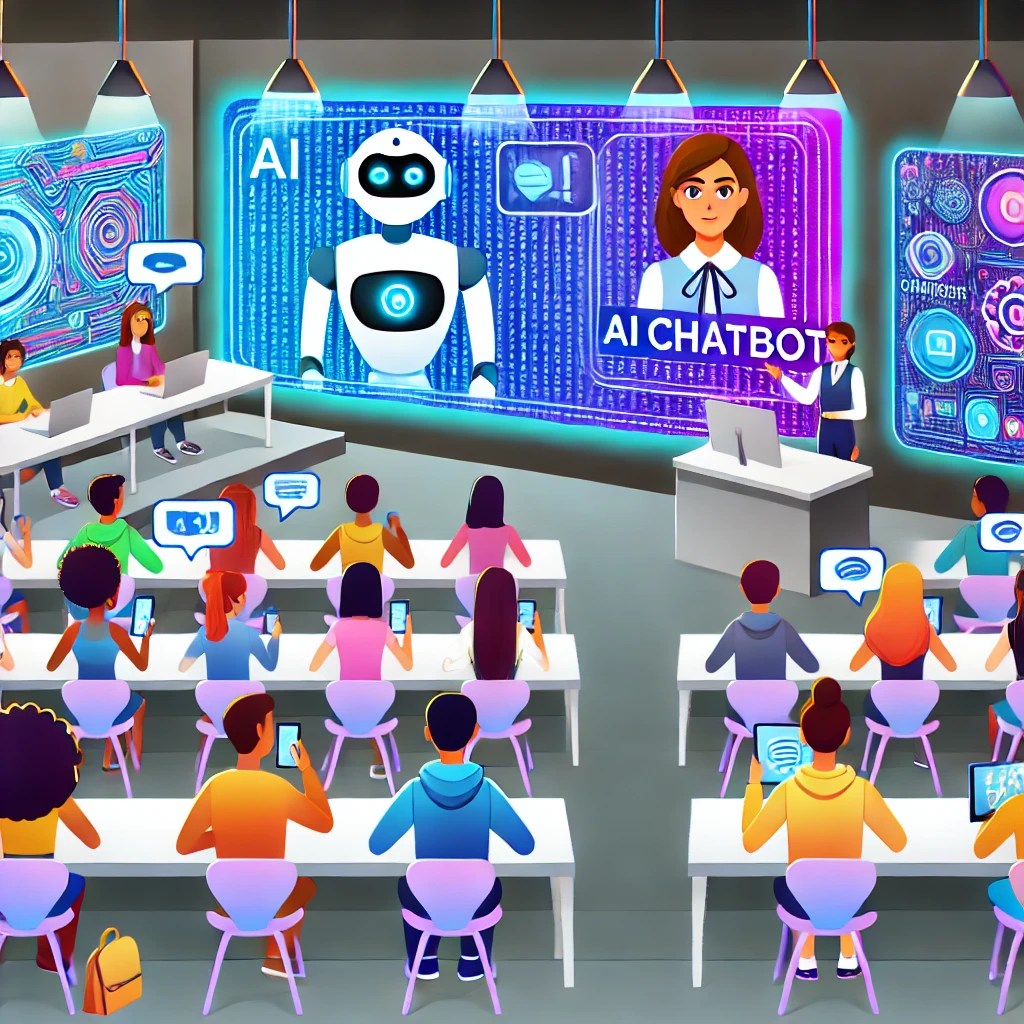
Heather Kuhaneck 12-18-24*
(* The idea for this came from Lauren Tucker, a special education faculty member at Southern CT STate University)
Introduction to Course Bots
How often have you received student questions via email, that you feel could be answered via the syllabus or assignment materials you have provided? One innovative solution for supporting students and answering their questions efficiently and effectively is the use of AI-powered course bots. The digital teaching assistants are designed to answer common questions and provide clarity on course assignments. By uploading essential course documents—such as the syllabus, assignment instructions, and rubrics—course bots can provide quick, accurate, and consistent answers to routine queries. This not only enhances the student experience but also frees up valuable time for instructors to focus on other aspects of their teaching.
What is POE?
According to the POE website (Poe.com), POE is “a platform that lets people ask questions, get instant answers, and have back-and-forth conversations with a wide variety of AI-powered bots.” POE is a versatile platform that allows users to access and interact with a variety of AI models seamlessly. Developed to make advanced AI tools more accessible, POE enables instructors to create customized AI bots for specific tasks, including assisting with course-related queries. By leveraging the capabilities of AI, POE simplifies the process of training a bot to understand and respond to questions based on uploaded documents, such as syllabi and rubrics. For an introduction to Poe, you may also wish to read this online article.
POE’s user-friendly interface allows instructors to:
- Upload relevant course documents.
- Train bots to answer specific types of questions.
- Ensure bots are accessible to students anytime, anywhere.
The result is a responsive AI assistant that can significantly improve communication within a course.
Why Use Course Bots?
Course bots provide a solution to some of the challenges faced by educators in higher education. These AI-powered assistants offer immediate and accurate responses to students’ most common questions, improving access to information without delays. By centralizing answers from key documents like the syllabus, assignment instructions, and grading rubrics, course bots ensure consistent communication and reduce confusion. Additionally, their 24/7 availability supports students working on flexible schedules, enabling them to get assistance anytime they need it. For instructors, course bots alleviate the burden of answering repetitive questions, allowing more time for personalized teaching and engagement. Overall, course bots enhance efficiency, streamline communication, and promote a more supportive and responsive learning environment for students.
Why Use POE to Create Course Bots?
POE is an ideal platform for creating course bots for several reasons:
- Ease of Use: POE requires no advanced programming knowledge. You can set up a bot easily by simply uploading course documents.
- Scalability: POE-powered bots can serve large class sizes effectively, reducing the administrative burden on instructors.
- Consistency: By relying on uploaded course materials, Poe’s bots ensure consistent and accurate responses, minimizing miscommunication.
Whether it’s clarifying due dates, explaining grading rubrics, or providing assignment guidelines, POE bots offer reliable support that aligns with the course’s requirements.
How do you create your own course bot?
- Access Poe AI via poe.com
- Log on and select the ‘Create a bot’ option.
- When asked for the “handle” name your bot with something related to your course, such as the course # or title
- It will ask you for the base model (I use chatgpt because it is what I am most familiar with and comfortable with).
- You will need to train your bot by writing a detailed prompt
- For example: “You are an OT professor teaching a course on _______ and you are able to answer questions about (list them). If you do not find the answer in the uploaded materials, you are to prompt the student to check with the course instructor”
- Then you will be asked to provide the knowledge base. This is where you can upload your syllabus, your assignments, and your rubrics. Upload the files you choose and then click create bot.
- Now see how well it works by asking it the types of questions your students likely would. (This can actually help you find places where your syllabus or assignments are unclear).
You may compose a welcoming message that will introduce your chatbot to users—something like, “Hello, I am the OT101 bot and I am here to provide you with guidance on __________. Please type your question.” You may include suggested replies to guide students or just use your uploaded documents.
Evidence Supporting the Use of Course Bots
While AI in education is still a developing field, early findings indicate promising benefits of AI-powered tools, including teaching assistant bots:
- Improved Student Engagement: students who use AI-powered course assistants report higher levels of engagement and satisfaction and some studies report improved motivation, in particular when bots are used to guide content review of material and when they are used with adult learners to individualize their learning and autonomy. In flipped learning, bots provide personalized support. Students report willingness to use chatbots and a generally positive outlook towards this new technology.
- Reduced Instructor Workload: AI tools significantly reduce the time instructors spend addressing repetitive student queries, allowing them to focus more on content delivery and individualized instruction.
- Enhanced Learning Outcomes: AI chatbots have a positive effect on learning outcomes. Students using AI teaching assistants performed better on assignments due to clearer understanding of grading rubrics and guidelines, and also the use of the chatbot as a tutor in some of the studies.
While more rigorous and large-scale studies are needed, these initial findings suggest that AI-powered tools like course bots have the potential to enhance the learning experience, reduce faculty workload, and improve student outcomes.
References
Aleedy, M., Atwell, E., & Meshoul, S. (2022). Using AI chatbots in education: recent advances challenges and use case. Artificial Intelligence and Sustainable Computing: Proceedings of ICSISCET 2021, 661-675.
Aytaç, Z. (2024). Using Artificial Intelligence Tools in Higher Education. In Innovation in the University 4.0 System based on Smart Technologies (pp. 164-175). Chapman and Hall/CRC.
Baskara, F. R. (2023). Chatbots and Flipped Learning: Enhancing Student Engagement and Learning Outcomes through Personalised Support and Collaboration. IJORER : International Journal of Recent Educational Research, 4(2), 223-238.
Cheung, P., Chan, I., Guo, R., & Woo, B. S. (2024). Educational bots: How chatbots and intelligent agents can improve student experience. In INTED2024 Proceedings (pp. 6673-6679).
Gupta, S., & Chen, Y. (2022). Supporting inclusive learning using chatbots? A chatbot-led interview study. Journal of Information Systems Education, 33(1), 98-108.
Lakshmi, Y. V., & Majid, I. (2022). Chatbots in education system. University News: A Weekly Journal of Higher Education, 60(8), 15-18.
Lee, Y. F., Hwang, G. J., & Chen, P. Y. (2022). Impacts of an AI-based cha bot on college students’ after-class review, academic performance, self-efficacy, learning attitude, and motivation. Educational technology research and development, 70(5), 1843-1865.
Lin, X. (2024). Exploring the Role of ChatGPT as a Facilitator for Motivating Self-Directed Learning Among Adult Learners. Adult Learning, 35(3), 156-166. https://doi.org/10.1177/10451595231184928
Mendoza, S., Sánchez-Adame, L. M., Urquiza-Yllescas, J. F., González-Beltrán, B. A., & Decouchant, D. (2022). A model to develop chatbots for assisting the teaching and learning process. Sensors, 22(15), 5532.
Wu, R., & Yu, Z. (2024). Do AI chatbots improve students’ learning outcomes? Evidence from a meta‐analysis. British Journal of Educational Technology, 55(1), 10-33.
Wu, Y. C., Petersen, A., & Zhang, L. (2022, July). Student Reactions to Bots on Course Q&A Platform. In Proceedings of the 27th ACM Conference on on Innovation and Technology in Computer Science Education Vol. 2 (pp. 621-621).
 The Wizard of OT
Leave a comment